Skip to product information
1 of 9

Organic Matcha Decaf

Organic Matcha Decaf

  • Matcha, Much Less Caffeine: Rich umami, about 6 mg per serving.
  • Gently Decaffeinated: Water and CO2 only, no chemical solvents.
  • Organic with Confidence: Certified organic, non-GMO, ISO 22000.
  • Silky-Smooth Texture: Slowly stone-milled into ultra-fine powder.
  • EGCG Retained: About 81 mg per serving after decaffeination.
Looking for more caffeine? Try our Matcha.

Available Sizes:

Available Sizes

Frequency:

Quantity
  • Shipping truck icon in green lineUsually Ships within 24 hours
  • Product label icon in green lineFree Shipping on Orders $100+*
  • Online review icon in green line100% Satisfaction Guarantee

Enjoy Matcha, with Much Less Caffeine

Love the vibrant flavor of Japanese matcha but prefer very little caffeine? Yu Tea's Organic Decaf Matcha lets you enjoy the rich umami, deep green character and naturally velvety texture of matcha with about 6 mg of caffeine per serving. It's an inviting way to keep matcha in your daily ritual, from a mindful morning to a relaxing evening.

Made from carefully selected first-harvest leaves. Our tender, shade-grown tea leaves deliver matcha's distinctive flavor and full-bodied character, stone-milled into an ultra-fine powder for a smooth, satisfying cup.

Decaffeinated without chemical solvents. We use a two-step process, first with water and then with supercritical carbon dioxide, to remove most of the caffeine while keeping the tea's EGCG and L-theanine.

More to appreciate in every serving. Our most recent batch testing measured about 81 mg of EGCG and 23.7 mg of L-theanine per 1.5 g serving, with about 6 mg of caffeine. Results vary by lot and packaging.

Curious how decaf matcha is made? Explore our guide to decaf matcha to learn about the decaffeination process and what remains in your cup. Enjoy the distinctive pleasure of Japanese matcha, with more freedom to choose when it fits your day.

How to drink

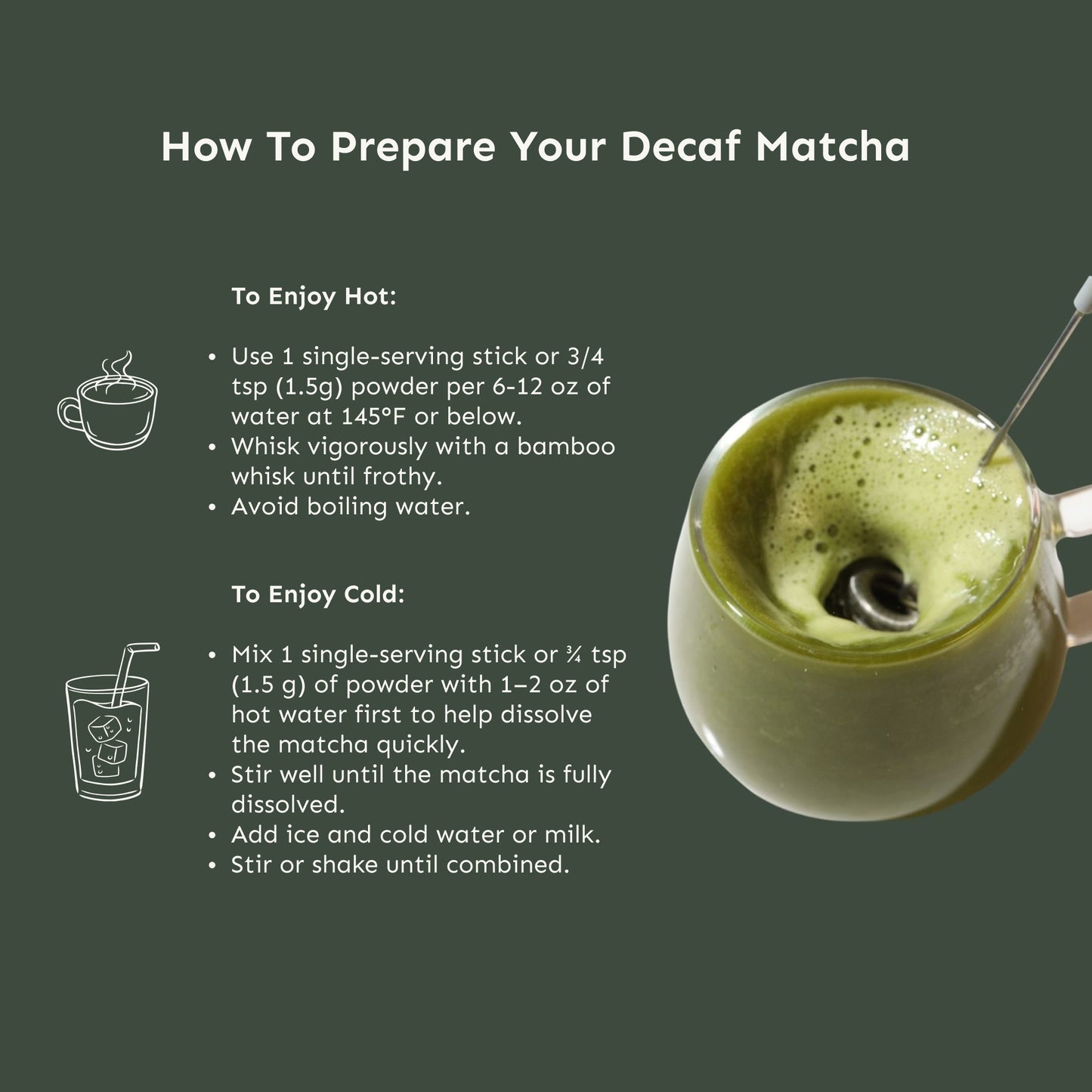
To Enjoy Hot: Use 1 single-serving stick or 3/4 tsp (1.5 g) of powder per 6–12 oz of water at 145°F or below. Avoid boiling water. Whisk vigorously with a bamboo whisk or a frother.

To Enjoy Cold: Empty powder from 1 single-serving stick or 3/4 tsp (1.5 g) of powder per 8 oz of water and stir.

**Add milk and sweetener if desired. For the most EGCG, drink at least some of it plain.

Ingredients

100% Organic Japanese Decaffeinated Matcha Powder (Ceremonial Grade A)

Shipping

Free shipping within the contiguous United States on orders over $100
View full details

100% Organic

Japanese Origin

First Crop/Harvest

Vegan

Gluten Free

Non-GMO

100% Organic

Japanese Origin

First Crop/Harvest

1
Harvesting matcha leaves

Sourcing

Harvest icon
Harvest

Organic tencha leaves are sourced and inspected for quality.

Screening icon
Screening

Foreign materials are removed.

2
Caffeine removal machinery

Dual Caffeine Removal

Water-Based icon
Water-Based Extraction

Caffeine is gently extracted using only water, retaining nutrients and flavor.

CO2 icon
Supercritical CO2 Extraction

Removes caffeine from green tea naturally, with no chemical solvents, preserving its flavor, nutrients, and purity.

3
Stone mill grinding matcha

Stone Milling

Milling icon
Stone Milling

Decaffeinated leaves are milled with traditional stone grinders, achieving a fine, smooth powder.

4
Quality control inspection

Rigorous Quality Control

Inspection icon
Inspection

Leaves are screened for contaminants multiple times through the process.

Testing icon
Testing

Batches are tested for quality, taste, and safety.

5
Packing facility

Packing & Shipping

Packing icon
Packing & Shipping

Sticks are nitrogen-flushed and pouches carry an oxygen absorber to keep the matcha fresh.

Key Features

Your matcha journey starts here, where matcha becomes more than just a drink - it's a mindful ritual, now with very little caffeine, so you can enjoy it any time of day. Let us guide you to a daily practice of balance and intentionality.

  • Green Tea Decaffeination Facility

    Dual Decaffeination

    Water and then supercritical CO2 remove most of the caffeine while keeping most of the EGCG and L-theanine; in our latest batch testing, 86% of the EGCG stayed. The flavor stays rich and round.

  • Stone milling green tea

    Traditional Craftsmanship

    Stone milling slowly grinds the decaffeinated leaves into an ultra-fine powder, giving the smooth, velvety mouthfeel of premium matcha.

  • Sustainable Green Tea Growing

    Sustainability

    Our decaffeination uses water and carbon dioxide rather than chemical solvents, and organic farming supports healthy soil, clean water and biodiversity for future generations.

Green Tea Leaves in Hand

Catechins From the Whole Leaf

You drink the whole stone-milled leaf, so nothing stays behind in a tea bag. Each 1.5 g serving carries about 81 mg of EGCG, 86% of what the leaf held before decaffeination (from our most recent batch testing; results vary by lot and packaging).

Drinking Decaf Matcha

Matcha for Any Time of Day

Our Decaf Matcha keeps about 23.7 mg of L-theanine per serving, against about 28 mg in our regular matcha, with only about 6 mg of caffeine (from our most recent batch testing; results vary by lot and packaging). It is the smooth, savory matcha cup for an afternoon or evening.

Decaf matcha powder on a white background

The Same Silky Matcha

Our Decaf Matcha keeps the silky texture of our ceremonial matcha with a gentler top note: macadamia cream, fresh coconut and a mellowed umami.

Woman drinking decaffeinated matcha

Matcha Decaf's Tasting Notes

Woman drinking decaffeinated matcha
Maintaining the signature silkiness of traditional matcha, this decaf version leans toward a gentle nuttiness, reminiscent of macadamia cream. Hints of fresh coconut and mellowed-out umami make it a soothing, low-caffeine indulgence.

Aroma

roasted nuts
Macadamia
white flower on white background
Creamy vanilla
coconut
Fresh coconut

Taste

Decaf Matcha in Clear Glass Mug
Velvety
Luscious
Umami-rich
From Our Community
1 of 3
From the Experts
  • Dr. Deirdre Orceyre

    A naturopathic physician and acupuncturist with over 20 years of experience, she specializes in integrative care, using nutrition, herbal medicine, and acupuncture to address the root causes of health imbalances.

  • Dr. Easter Ho

    A naturopathic doctor specializing in oncology, she integrates diet, lifestyle, and therapies like IV vitamin C to support cancer patients, focusing on relapse prevention and personalized palliative care.

  • Dr. Emma Lee

    A naturopathic doctor dedicated to empowering patients at every life stage, she combines evidence-based practices with holistic care to address root causes and support informed health decisions.

  • A man smiles picture Dr. Chad Aschtgen

    A board-certified naturopathic oncologist, he collaborates with patients and oncologists to create personalized care plans that enhance treatment efficacy and support all cancer stages.

Why Choose Yu Tea? A Side-by-Side Comparison

Brand 1 Brand 2
100% Organic ✓ ✓ ✓
Authentic Japanese Tea ✓ ✗ ✗
Whole Leaf in Powder Form ✓ ✓ ✗
Convenient and Easy to Use ✓ ✗ ✓
Highest Grade Leaves ✓ ✗ ✗
Tested for Purity ✓ ✗ ✗
 

Frequently asked questions

Why is Yu Tea Matcha quality superior to others?

Not all matcha labeled "ceremonial grade" lives up to the name; lower grades are often sold as ceremonial. At Yu Tea, we believe great matcha starts with an unwavering commitment to quality, so we offer only organic ceremonial-grade matcha.

Shade-grown, first-harvest leaves give our matcha its vivid color, smooth umami and the calm, steady energy that comes from caffeine and L-theanine together. Many companies, including our former brand Sei Mee Tea, also offer "everyday" and "culinary" grades to keep prices down. Yu Tea chose a different path: a wider range of traditional Japanese teas, and only the very best of each type.

Taste the difference for yourself. For more, see our page explaining Matcha grades.

What is Ceremonial Grade A? How is it different from the other Ceremonial Grade?

Ceremonial A-Grade Matcha is meticulously crafted to achieve the highest standards in color, flavor, texture, and purity, setting it apart from generic ceremonial-grade matcha. While generic ceremonial matcha often varies in vibrancy, taste, and refinement, our A-Grade Matcha reflects superior cultivation, harvesting, processing, and testing practices, ensuring an exceptional tea experience every time.

Color: Vibrant Green from Superior Chlorophyll Content - Our Ceremonial A-Grade Matcha features a bright, vibrant emerald-green hue, a testament to its high chlorophyll content. This vibrant color results from shading tea plants for at least 20 days, usually three to four weeks, before harvest, stimulating chlorophyll production. In contrast, generic ceremonial matcha may have a yellowish or dull green color due to shorter shading periods or the use of less optimal leaves.

Flavor: Smooth and Sweet from Elevated L-Theanine Levels - The flavor of our A-Grade Matcha is characterized by its smoothness and subtle sweetness, thanks to its high L-theanine content. This amino acid, enhanced through proper shading techniques, creates a naturally balanced umami profile with no bitterness. On the other hand, generic ceremonial matcha often tastes more astringent or bitter due to lower L-theanine levels, reflecting subpar shading or the inclusion of mature, coarser leaves.

Texture: Ultra-Fine Powder for a Luxurious Mouthfeel - Our matcha is meticulously crafted using traditional stone mills, which gently press and slowly grind tea leaves into ultra-fine, rounded particles. This careful process creates a distinctive, luxurious mouthfeel.

In contrast, machine-based grinding methods cut or break the tea leaves into sharp-edged particles, producing a coarser powder. While this approach allows the powder to dissolve more quickly in water, it lacks the smooth, velvety texture and authentic experience of stone-milled matcha.

Do you have any brewing tips or preferred preparation methods that enhance the unique flavor profile of your Matcha?

Our matcha is made exclusively from young, tender leaves ground by traditional stone mills, a process that enhances its exceptional quality. Due to the delicate nature of the leaves, the powder has a sticky texture, much like grinding tender baby spinach with a mortar and pestle. To enjoy its smooth, velvety consistency, whisking is essential. A traditional bamboo whisk adds a mindful, meditative aspect to the tea-making ritual, but a quick whirl with a handy electric frother works as well.

Some believe that easy mixability indicates higher quality, but in fact, it often signals coarser, more mature leaves or machine grinding. Methods like machine cutting or ball-milling create jagged, uneven particles that mix easily in water. In contrast, the stone mill method produces smooth, round, uniform particles that result in the velvety mouthfeel of premium matcha.

Another common misunderstanding about matcha is its "mixability" in water. Unlike sugar, the powder doesn’t dissolve in water because it’s finely milled plant material. So, it’s natural for the powder to suspend in water, and you may notice some settlement over time. This is not a sign of low quality - simply give the cup a gentle sway or stir it to restore the suspension. Unusually high mixability often signals lower quality tea leaves and/or grinding methods, and may even indicate the inclusion of agents like tapioca. Additionally, if the powder completely dissolves, it could be freeze-dried liquid, not wholesome tea leaves in powder form.

For the best experience, we recommend using pure water heated to 145°F. This
temperature preserves the smooth, rich umami flavor and velvety texture. Higher
temperatures can create a sharp sensation in the mouth, diminishing the roundness of high-quality matcha.

For step-by-step guidance on preparing your matcha for the best flavor and texture, check out our green tea preparation guide.

How much caffeine is in your Decaf Matcha?

To help you make informed choices about your tea consumption, here's a comparative look at caffeine content across our tea collection (per serving, one stick) along with other common beverages (per 8 oz):

Yu Tea Collection*:

Decaf Sencha : 4 mg

Genmaicha: 5 mg

Decaf Matcha: 6 mg

Hojicha: 17 mg

Sencha: 20 mg

Matcha: 41 mg

Other Beverages:

Decaf Coffee: 2 – 12 mg

Hot Chocolate: 5 – 25 mg

Black Tea: 14 – 61 mg

Brewed Green Tea: 24 – 40 mg

Coffee: 95 – 240 mg

*Note: Our tea values are from our most recent batch testing; results vary by lot and packaging.

Wondering how a decaf matcha can exist at all? We explain the water and CO2 process, and what is left in the cup, in our decaf matcha guide.

What does Decaf Matcha keep from regular matcha?

Most of what is in the leaf. In our most recent batch testing, a 1.5 g serving carried about 81 mg of EGCG (86% of what the leaf held before decaffeination) and 23.7 mg of L-theanine, against about 28 mg in our regular matcha, with about 6 mg of caffeine; results vary by lot and packaging. Because you drink the whole leaf, you get what the leaf holds rather than an infusion, which makes it a good choice for matcha in the afternoon or evening.

For the full picture of what decaf green tea keeps, how much caffeine is left and how it is made, see decaf green tea: benefits, caffeine and how it is made.

Does the decaffeination process reduce the polyphenol content in matcha?

Some, but less than you might expect. Our water and CO2 process keeps most of matcha's catechins and L-theanine (from our most recent batch testing; results vary by lot and packaging):

  • EGCG: 86% stays, about 81 mg per 1.5 g serving.
  • L-theanine: 23.7 mg per 1.5 g serving, against about 28 mg in our regular matcha.
  • Caffeine: 5.7 mg per serving, against about 41 mg in our regular matcha.

Enjoy its rich, smooth flavor at any time of day.

How is caffeine removed from Yu Tea's Organic Decaf Matcha?

We use a meticulous dual decaffeination process to ensure caffeine is gently removed while maintaining matcha's vibrant flavor, nutrients, and smooth texture.

  1. Water Extraction: We start by using a water-based method to dissolve and extract most of the caffeine. This gentle approach safeguards the tea’s essential nutrients and structural integrity.
  2. Supercritical CO2 Extraction: In the second stage, we apply supercritical CO2 technology. This process is highly effective at preserving matcha’s delicate flavor, rich chlorophyll content, and antioxidants like catechins and L-theanine.

Following extraction, the leaves are thoroughly dried and inspected for contaminants through visual screening and advanced separators. They are then stone-milled into a fine powder, enhancing the smooth, velvety texture Yu Tea is known for. Each batch undergoes final testing to ensure a product that is pure, flavorful, and free from impurities.

Our process reflects a commitment to natural decaffeination without chemical solvents, combining traditional craftsmanship with modern innovation to deliver premium decaf matcha. For further information, please see Yu Tea's decaffeination process page.

Do you test your Matcha (and other teas) for contaminants such as heavy metals?

Yes, we conduct rigorous testing on all our tea products, including Matcha, to ensure their quality and safety. This includes testing for potential contaminants such as heavy metals like lead. While trace amounts of certain elements can naturally occur in soil, we take every precaution to ensure our teas meet the highest safety standards for food products.

We are committed to transparency and providing safe, high-quality teas to our customers. For more information about contaminants in food, you may find resources like the FDA’s Environmental Contaminants in Food page helpful.

All Yu Tea products are food, not intended to diagnose, treat, cure, or prevent any disease. As with any food product, we recommend consulting with your healthcare provider if you are pregnant, nursing, taking medication, or have specific health concerns before incorporating our teas into your routine.

Which health professionals work with Yu Tea?

Yu Tea is a food, not a medicine. Over the years we have worked with a group of naturopathic doctors, integrative oncologists, nutritionists and health coaches; you can meet them on our experts page. If you have a health condition or take medication, please ask your own doctor whether green tea suits you, since green tea can interact with some medicines.

What is the difference between Matcha and Sencha powder?

Matcha and sencha powder are both made from whole green tea leaves, but they are grown and processed differently. Matcha is shade-grown for several weeks before harvest, which raises its L-theanine and chlorophyll. That gives it a vivid green color, a creamy umami taste, and the calm, steady focus that comes from caffeine and L-theanine together.

Sencha grows in full sun, so more of its L-theanine turns into catechins, which give it a refreshing, slightly astringent taste. Gram for gram, our sencha has slightly more EGCG than our matcha. A serving has about 20 mg of caffeine against about 41 mg in matcha (from our most recent batch testing; results vary by lot and packaging), so it is a good choice if you are sensitive to caffeine.

With both powders you drink the whole leaf, not just what steeps out of it. Your choice comes down to taste: matcha's smooth, rich profile or sencha's light, crisp flavor. For more, see Matcha vs. Sencha, or start with what sencha is.

Do plant-based milks or sweeteners affect the benefits of green tea?

The one study done with green tea and milk found that skim milk lowered the EGCG people absorbed by about a third, while most of the catechins still got through; milk proteins (caseins) bind to catechins. You can read what the studies found in our milk and green tea article.

We don't know of studies in people that tested plant-based milks with green tea. Almond, oat and other low-protein milks have less of the proteins that bind catechins, so they are a reasonable choice for a latte, but that is an educated guess, not a tested result.

We haven't seen evidence that a little sweetener changes what green tea's catechins do, so choose the one you like and use it sparingly; try the tea plain first, since good green tea has its own natural sweetness. If you drink green tea for its EGCG, have at least some of it plain, with water only.

How many grams of Decaf Matcha are in the single-serving stick and the pouch?

Each single-serving Decaf Matcha stick contains 1.5 grams or roughly 3/4 tsp.

Each pouch of Decaf Matcha contains a net weight of 75 grams or roughly 2.65 oz.

How should I store my Decaf Matcha?

To retain the freshness and potency of your Yu Tea Decaf Matcha, it's essential to store it away from air, sunlight, moisture, and heat. Follow these steps for optimal preservation:

  • Resealable Bags: Our teas come in resealable pouches or individual single-serving sticks for extra convenience and freshness. For pouches, after each use, gently squeeze out the air and reseal the bag securely.
  • Alternative Containers: If desired, transfer your tea to a non-clear, air-tight container with a snug-sealing lid to keep it fresh.
  • Temperature Control: In warmer climates (average temperatures around 70°F), store in the fridge if possible. Ensure to bring it to room temperature an hour before use to prevent condensation.

Over time, matcha’s potency gradually decreases. The "best by" date is set for two years after production to maintain optimal nutritional value and flavor. Tea consumed beyond this period may still be safe to drink but will likely have diminished flavor, aroma, and health benefits. To fully enjoy your Decaf Matcha's vibrant taste and wellness properties, we recommend consuming it fresh or purchasing a new supply once it's past the best-by date.

By adhering to these storage guidelines, you'll ensure that every cup of Yu Tea you brew is as vibrant and beneficial as the last, celebrating the authentic essence of our meticulously crafted teas.

Can I use Decaf Matcha in recipes?

Absolutely! Decaf matcha is versatile and can be used in various recipes, including smoothies, baked goods, and savory dishes, adding a unique flavor and nutritional boost without the caffeine. For inspiration, explore our collection of delicious matcha recipes (which can use regular matcha or decaf), perfect for any occasion.

Do you offer your Matcha wholesale?

Absolutely! We welcome wholesale inquiries. Simply email us, and we will take care of your needs.

Don't see your question? See our main FAQ page.

Decaf Matcha in a mug with single-serving sticks

Smooth, Calm Matcha with Very Little Caffeine

Decaf Matcha in a mug with single-serving sticks
leaf icon green lines on white circle background

Certified 100% Organic

First crop, Japanese ceremonial grade A matcha

heart icon in green lines on white circle background

Catechins and EGCG

About 81 mg of EGCG per serving

Shield icon deep green lines on white circle background

Water and CO2 Decaffeination

No chemical solvents

Thumbs up icon in green lines on white circle background

L-Theanine, Very Little Caffeine

About 23.7 mg of L-theanine, 6 mg of caffeine

Experience the Serenity of Decaf Matcha

Enjoy the smooth, vibrant taste of matcha with very little caffeine. Our Decaf Matcha keeps most of the EGCG and L-theanine of our matcha and its silky texture, making it the perfect choice for a calming, anytime sip.

  • Dr. William Li

    Dr. William Li

    I love it! It's beautiful, it tastes great, and it's good for your soul.